Aaliyah Robinson
Coiled Commerce
During the transatlantic slave trade, nearly 13 million African people were kidnapped, enslaved, and engulfed in inhumane conditions that caused their hair to become matted and tangled, leading to the development of scalp diseases. Upon their arrival in the United States, their heads were shaved, erasing their identity and dignity.
As advertisements and newspapers became prominent sources of media, racist rhetoric was promulgated that regarded Black hair as unattractive, unkempt, and inferior to European hair. At the same time, companies began selling hair products containing harmful formulas that targeted Black consumers and produced a socially acceptable appearance. These standards for Black hair have been internalized within Black communities and passed down through generations of young Black children, causing generational division, health concerns, and an unsettling amount of money to be spent on detrimental hair products.
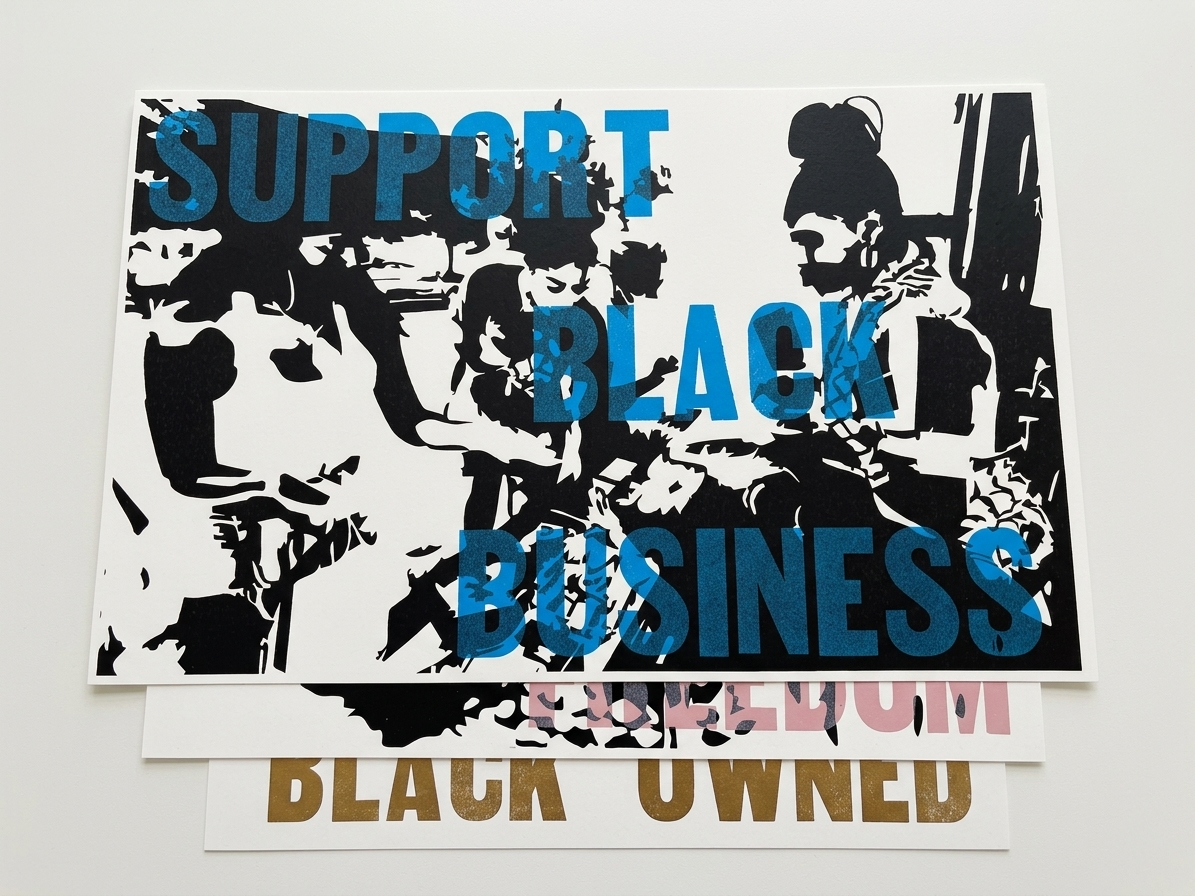
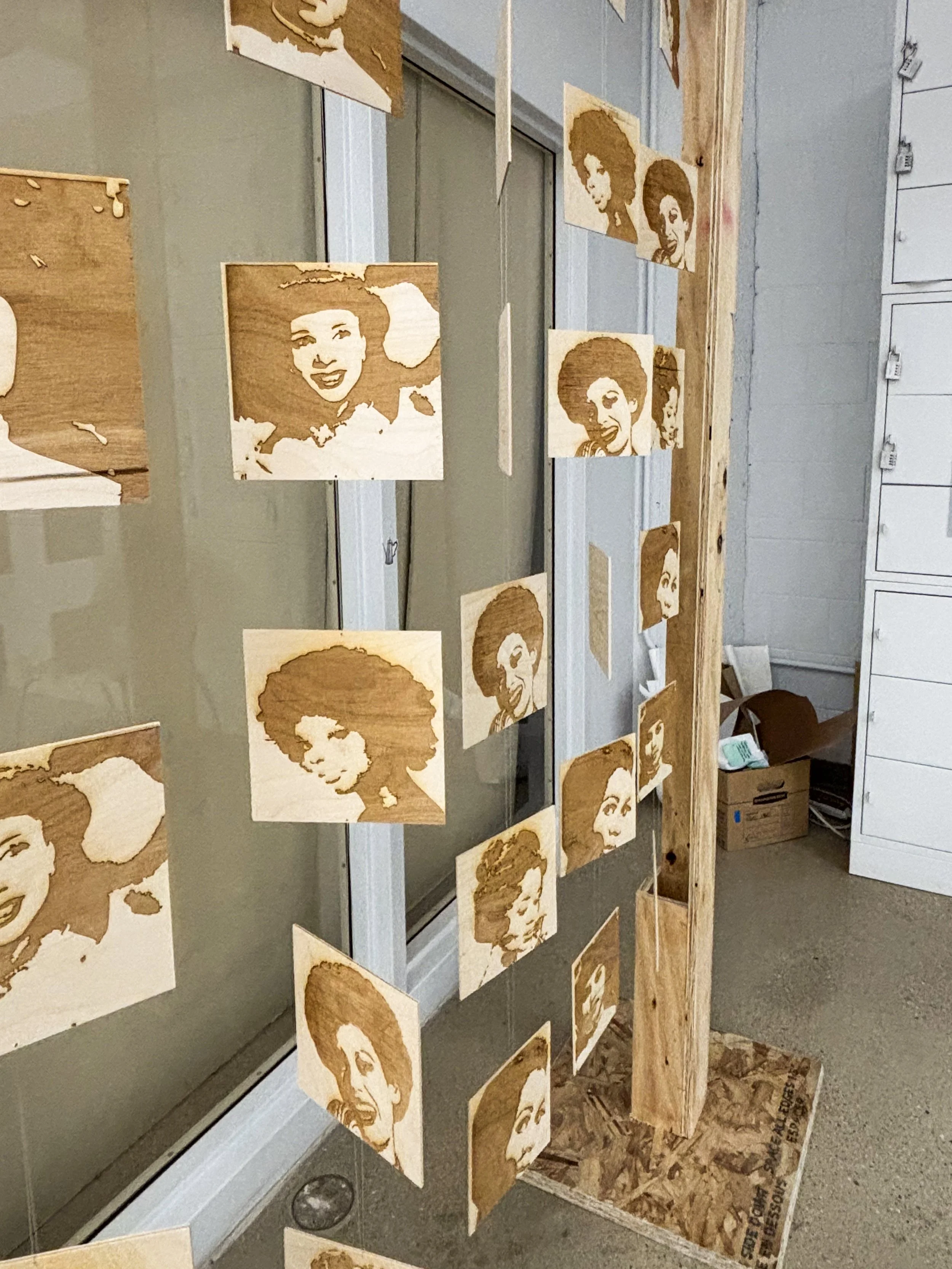
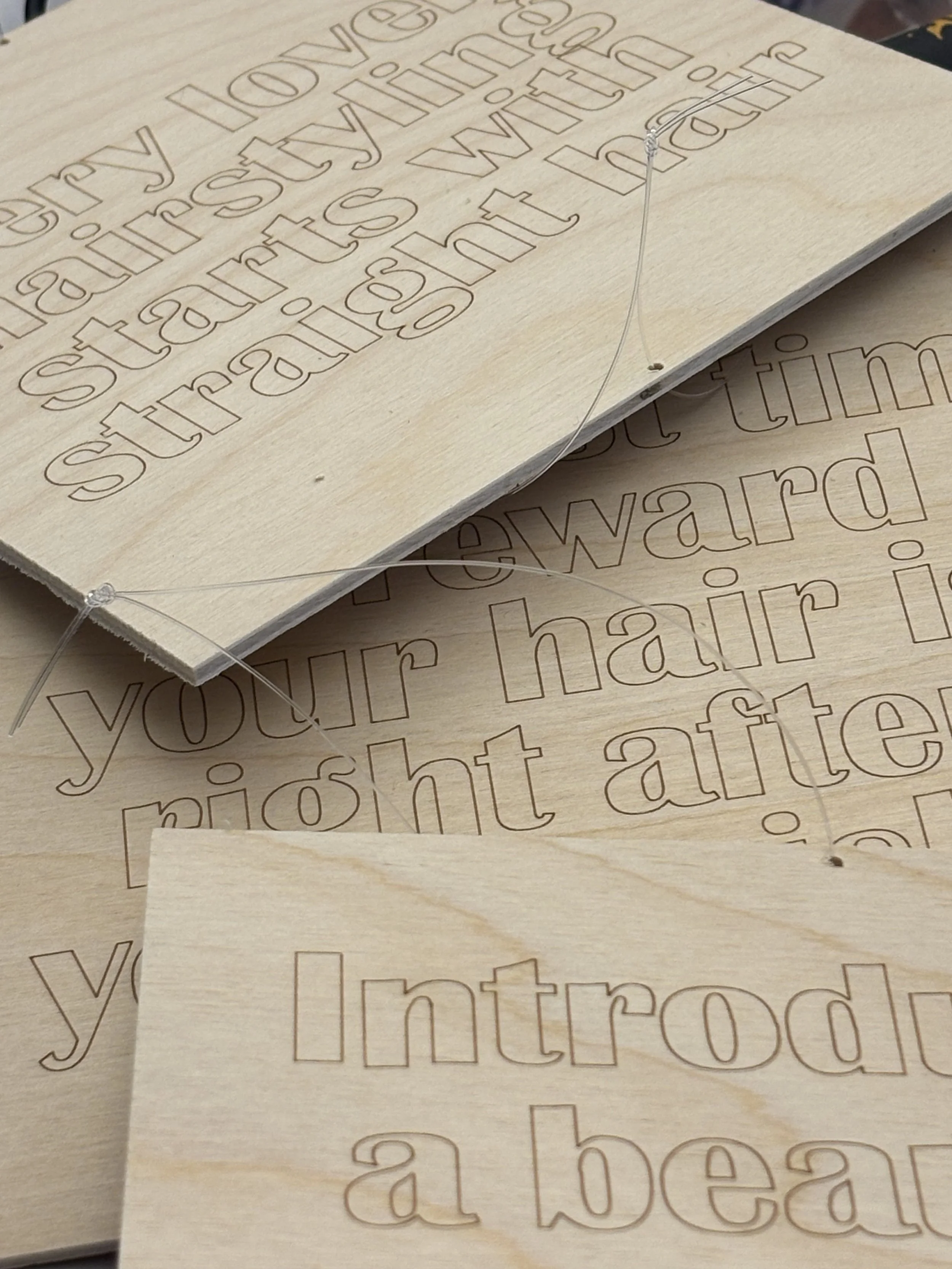
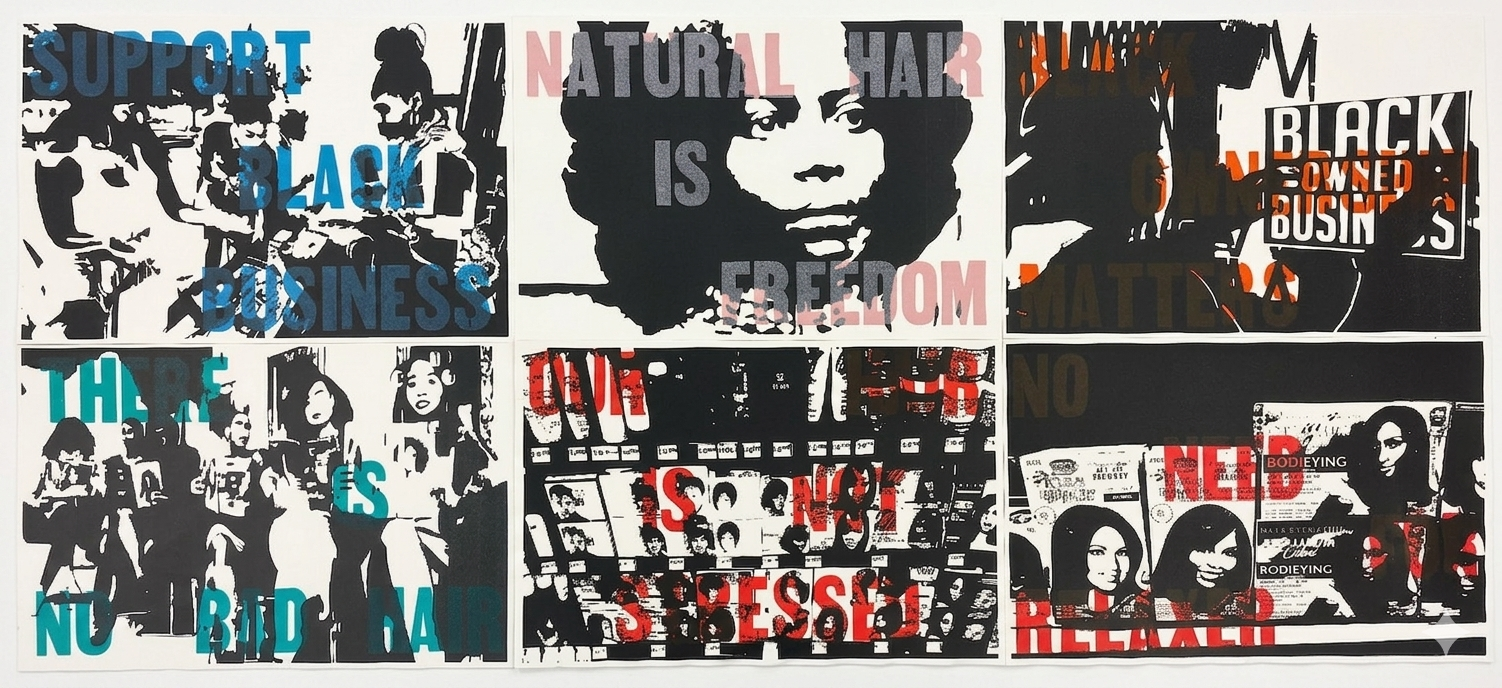
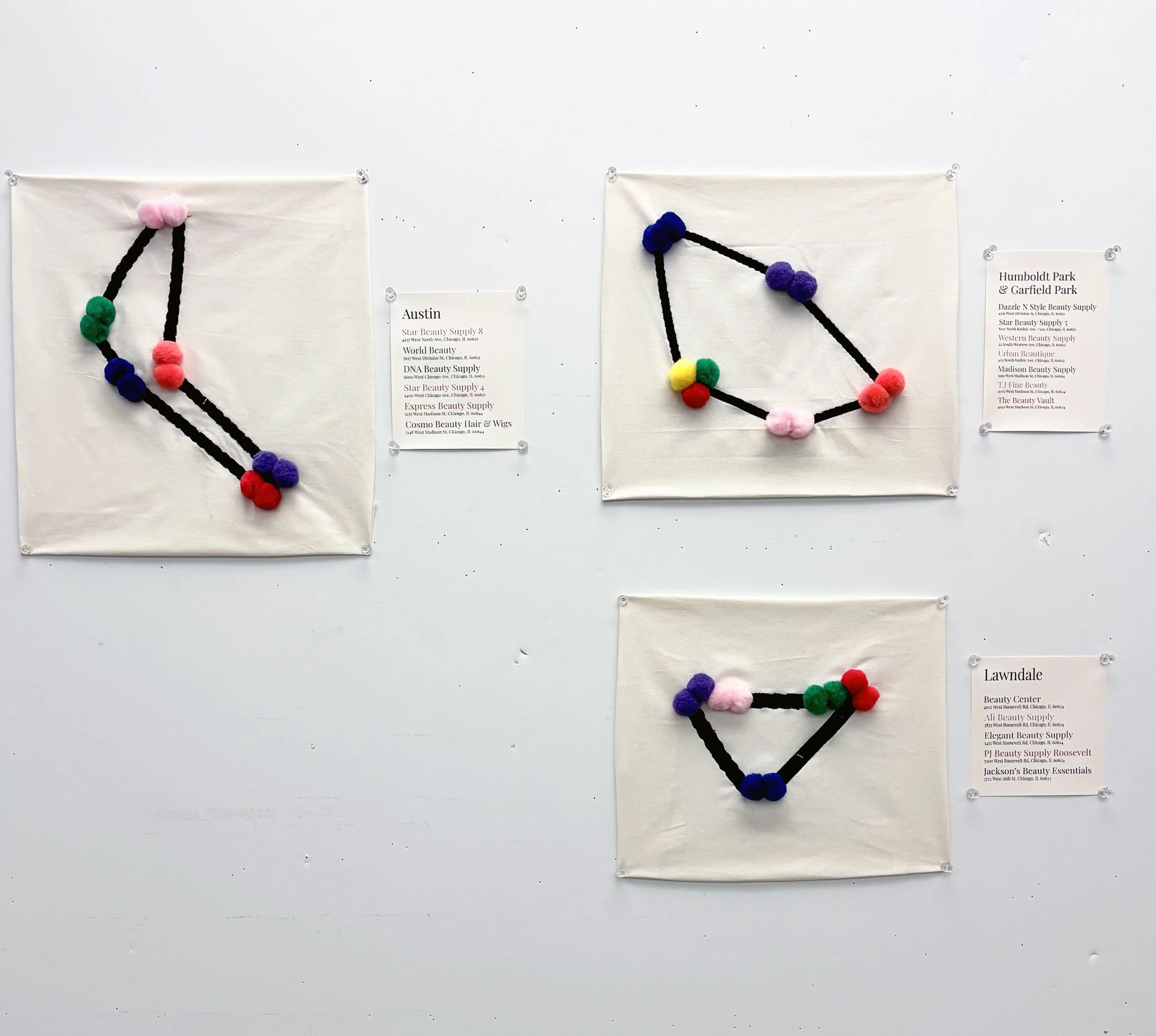
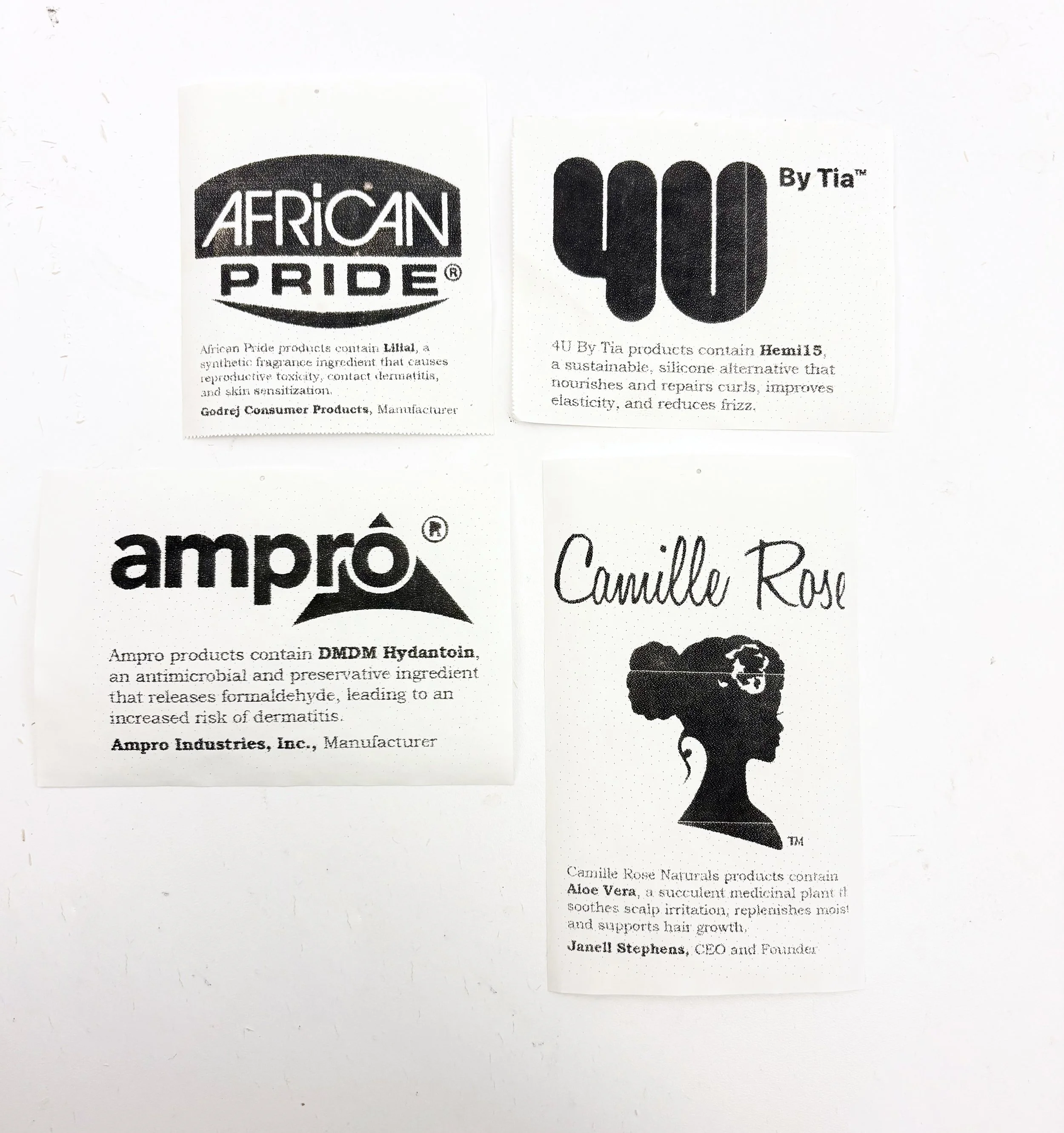
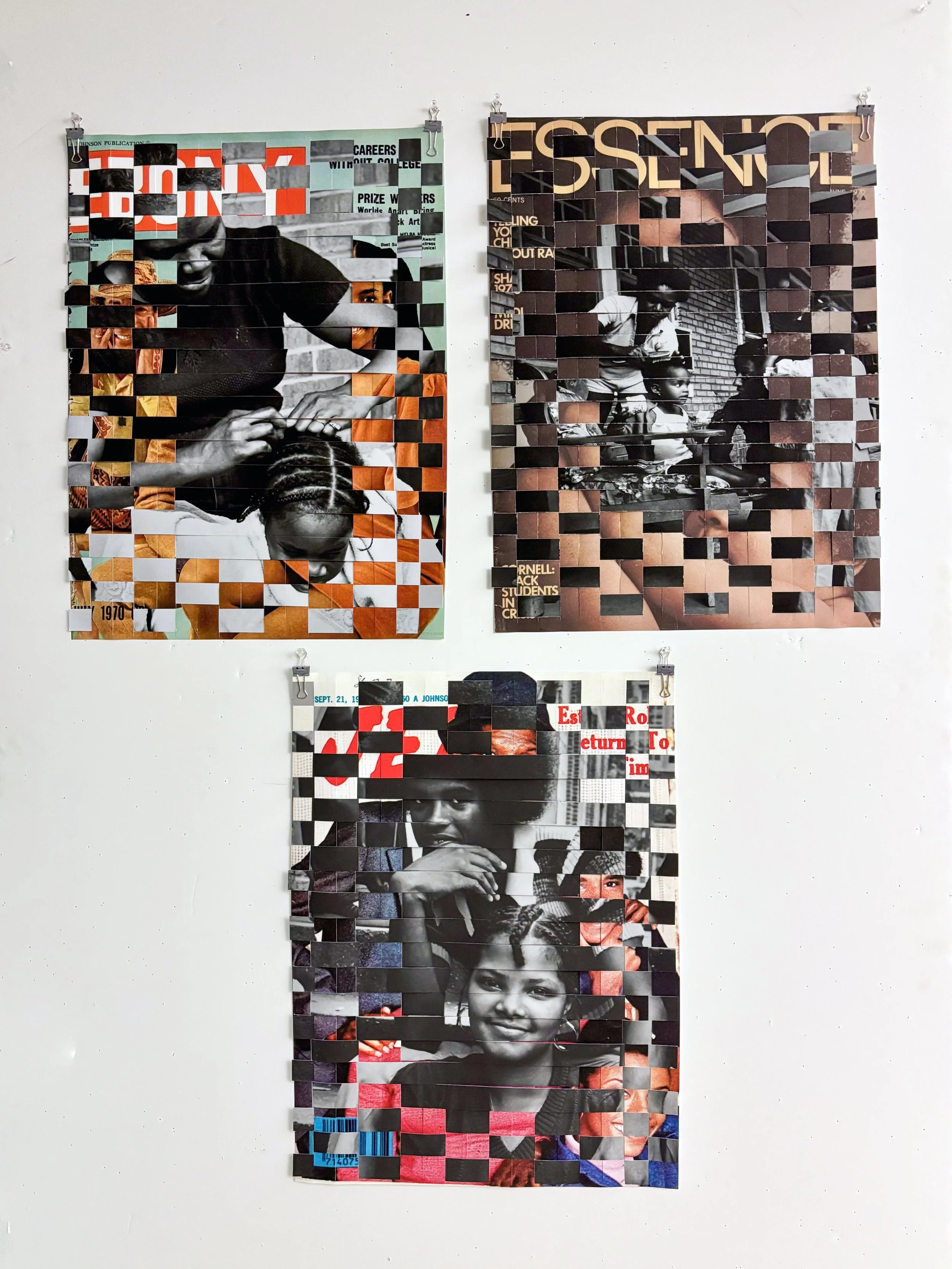
Coiled Commerce is an experiential installation that utilizes discursive design methodologies to investigate the interrelationships between Black hair and commerce, with particular attention to the importance of Black ownership, the ethics of hair products, and mutual support. Through letterpress printing, laser engraving, paper weaving, receipt printing, and embroidery, Coiled Commerce asks a series of questions: How does perception change when we dissect what we already know? How does Black representation impact the Black dollar? What happens when we allow for open conversation about economics, health, and ownership in the hair space?
Each methodological approach serves as a representative pillar, facilitating discussion of and reflection on sociocultural issues and behaviors within and beyond the Black diaspora.
The craft and tactility of letterpress printing strengthens statements opposing negativity towards Black hair while acknowledging the importance of Black ownership and support for Black businesses within the Black community.
Laser engraving removes material from the surface. This method dissects and distorts advertising in early Black media that targeted Black consumers. The imagery and language are separated to call attention to businesses that deemed Black hair to be disgraceful while pressuring customers into utilizing hair products that can kill the hair protein at the root.